
Thailand has similar property laws and regulations as western countries as the Thailand Civil Code is based on the mainland European civil law system and copied aspects from common law countries. Thai property laws are considered western. What makes buying real estate in Thailand different and more complicated for non-Thai nationals is that Thai land laws prohibit every foreigner from owning land making it impossible for foreigners to obtain outright ownership over land and house in Thailand.
Buying property in Thailand

Thailand real estate laws
Author: Robert M. Spelde (LL.M)
Thai legal knowledge:
Scroll down or jump to a subject by using the page links menu below
- Land ownership laws for foreign nationals
- Buying a condominium (foreign ownership)
- Apartments not registered under the Condominium Act
- What is leasehold interests in Thai real estate
- Buying a house on leased land
- Buying land when married to a Thai national
- Property purchase with a Thai nominee
- Right of Usufruct in Thailand
- Right of Superficies in Thailand
- Right of Habitation in Thailand
- Right of Servitude in Thailand
- Thai real estate holding company
- Ownership government issued land title deeds
- Real Estate transfer of ownership tax and fees
- Property Tax
- Building regulations
1 Land ownership by foreign nationals
1.1 - Foreigners cannot own land in Thailand but (in theory) individual foreigners can own land up to 1 rai (1600 square meters) in specified areas for residential purposes through a Board of Investment regulation (section 96 bis Land Code Act) which requires in addition to the land purchase a 40 million baht investment into Thailand in specified assets or government bonds beneficial to the Thai economy. IF granted (unlikely) it is under strict conditions and the land must be located in specified areas and requires approval of the Minister of Interior. Moreover this ownership is not transferable by inheritance, therefore limited to the life of the person granted the right to own the land for residential purposes under this exception. In practice, even if you would be very rich, this is not a viable option. Besides this one exception land ownership in Thailand is strictly prohibited for foreign individuals read more...
1.2 - Foreign companies with substantial investments benefiting the Thai economy may have special privileges and exemptions for land ownership granted under section 27 of the Investment Promotion Act, under section 44 of the Industrial Estate Authority of Thailand Act or section 65 of the Petroleum Act (only for the duration of their business in Thailand) read more....
1.3 - The foreign controlled Thai company with a majority Thai shareholding (in number of shareholders and percentage of shares) is through preference shares the only vehicle available for foreigners to control their investment in land in Thailand. Even though land ownership by a partly (up to 49%) foreign owned Thai company is as such not illegal under Thai land laws, the legality and land ownership by most of these partly foreign owned companies is controversial if not illegal. The Thai government is since 2006 restricting and discouraging the misuse of Thai companies to circumvent foreign property ownership restrictions in Thailand. read more...
1.4 - According to section 93 of the Land Code Act, a foreigner who acquires land by inheritance as statutory heir can have ownership in such land upon a permission of the Minister of Interior. Note that section 93 applies only to ownership of land by foreigners under a treaty (section 86) and NOT to foreigners receiving land as a statutory heir from a Thai spouse. There is currently no treaty in place allowing foreigners to own land in Thailand, therefore no foreigner will be given permission by the Minister of Interior. They can inherit the land as a statutory heir, but cannot register ownership and must sell the land within one year from the date of acquisition.
See also
- Thailand Land Code Act (law translation)
- Transfer tax and fee (knowledge)
- Land title deed (article knowledge)
- Inheritance law in Thailand (knowledge)
- Land sale agreement(TH-EN)
2 Condominium ownership by foreigners
2.1 - Foreign nationals (natural and juristic persons) may have ownership* of a condo (apartment unit or flat) in Thailand within the foreign ownership quota of a condominium, but 'aliens' buying a condo in Thailand must qualify for foreign ownership under section 19 of the Thailand Condominium Act. Foreign freehold ownership of a condo in Thailand means that:
- a) not more than a percentage of 49% of the total unit floor area in a condominium can be foreign owned, the remaining 51% must be owned by Thai natural or juristic persons (i.e. in case of 100 equal apartment units in a condominium building only 49 can be foreign-owned), and;
- b) when foreign ownership is available the foreigner buying a condo must qualify for ownership under section 19 of the Condominium Act, usually this means having properly brought into Thailand foreign currency at least equal to the total purchase price of the condo and having exchanged this amount into Thai baht inside Thailand.
2.2 - In case the foreign ownership quota in a condominium project is sold out possession of the remaining apartment units in the Thai side of the condominium may be transferred to foreigners under a lease agreement. As opposed to buying a condo freehold in Thailand there are no separate laws issued regulating leases of condos by foreigners. Leasehold gives the right of use and possession of the unit for a set period of time. Legally lease of a condo unit in Thailand is best described as a normal tenancy, the lessee does not obtain the title to the unit nor can he sell the unit, nor will he have co-ownership in the common areas of the condominium, nor voting rights in the joint owners meeting of the condominium juristic person. Once the set period in the lease expires the lease must be renewed (the owner willing to renew the lease) or possession of the unit must be given back to the real owner. A condominium lease agreement is as a contract governed by the section rent of property in the Civil and Commercial Code (see under 4 in this page) and as a hire of property subject to a 'rental tax' which is always passed on to the lessee in the lease agreement - read more...
See also
- Thailand condominium Act (law translation)
- Buying owning a condo (knowledge)
- Off-plan condo and escrow (article)
- Foreign exchange form (knowledge)
- Condominium handbook (practical)
- Ownership transfer fees (knowledge)
- Inheritance of a condo (article)
- Condo sale purchase agreement (resale)
3 Buying apartments not registered under the Condominium Act by foreigners
There are two types of residential apartment buildings in Thailand - condominiums registered and licensed with the Land Department offering outright ownership over the individual units, and apartment buildings NOT licensed as a condominium and therefore not offering individual ownership over the units. On the outside these buildings could look the same but legally they cannot be compared. Condominiums registered and licensed with the Land Department must comply with the legal structure as laid down in the Condominium Act which is built around individual unit ownership, joint ownership of the common areas and joint management of the building by all the unit owners. Unregistered apartment structures are not regulated by specific condominium laws and the developer of an apartment building can sell possession (not ownership) of the units in the building under his own terms and conditions. There are various contract structures under which these units are sold which vary from time-sharing schemes, mere apartment leases to leases combined with shares in a holding company. Beware, these apartment projects do not offer individual freehold ownership of the units and the purchasers do not find protection in the law as with registered condominiums. The contract structures and intention of the developer should be triple checked (e.g. the content of the lease structure, management system of the building, and ongoing financial costs through maintenance and management contracts).
See also
4 Rental, hire or lease in Thailand
4.1 - Thai law does not have separate leasehold laws, meaning lease as a real property right separate from normal hire of property laws. A property lease in Thailand is in the first place a tenancy contract governed by the section hire of property (sections 537 to 571) of the Civil and Commercial Code. One of the drawbacks of hire of property laws in Thailand is that a lease agreement is a personal contract right of the lessee and therefore automatically terminated upon his death. Thai law does not give the lessee's heirs an automatic right to inherit the leased property, and for the same reason the lessee is not allowed to sublease the property or assign ('sell' the remaining term of the lease) without permission of the owner. A lease agreement is not terminated upon death of the owner (section 569) but death of the owner does terminate all options in the lease agreement which are personal to the owner (e.g. renewal option). Death of the lessee could lead to a permanent ending of the lease and death of the owner or transfer of ownership could lead to the lessee ending up with a contract that is only partly enforceable by legal action against the new owner (as a third party to the contract).
4.2 - A lease in Thailand can be registered for a period not exceeding 30 years, When the fixed registered term runs out the lease automatically comes to an end. Some real estate leasehold sale contracts aimed at foreigners suggest longer terms and more rights than are possible and enforceable under Thai hire of property laws. These contracts between the seller and the leasehold buyer can be complex and must at least separate ownership of the house from the land and often include additional 30-year lease terms and the option in the contract (or addendum to the contract) to transfer the land to a freehold title. Legally this remains a contract structure between 2 or more parties only (not registered on the land (property) title and as a contract only binding between the parties). These contract structures are not protected by Thai law and could be considered void and illegal because foreigners are prohibited from owning land and leases cannot exceed 30 years.
Note that under new land office regulations (2008) the land offices must refuse registration of a lease agreement with obvious void or illegal provisions such as a foreigner's right to transfer land to freehold title and pre-paid 30-year renewal terms. For this reason these provisions are now often made in a separate addendum to the lease (a part of the lease arrangement not registered with the land office), despite the fact the Land Department considers these sale methods void or illegal.
4.3 - In an official property development the content of the freehold sale contracts under which the property (house or condo) is sold must comply with strict regulations and consumer protection laws. Selling property in the same development leasehold to foreigners does not have to comply with the same laws protecting consumers and the developer can based on general freedom of contract include various for him beneficial clauses and even misleading clauses in the lease agreement to generate sales, such as lease renewal terms suggesting a 90-year lease term.
- Lease and rent practical (FAQ)
- Rental housing tax (building and land)
- Real estate lease law (law translation)
- Leasehold condominium (opinion)
- Succession of a lease (legal opinion)
- Thai lease law blog (various articles)
- Lease agreements
5 House ownership separate from the land
5.1 Foreigners can't own land but are allowed to own the building separate from the land. Basically there are 2 ways of obtaining ownership over the house separate from the land, a- you build a house upon leased land (with or without a right of superficies) or b- you buy an existing house separate from the land and obtain a land lease. Transfer of an existing house must be in writing and registered with the competent authority (i.e. the Land Department/ branch office). The transfer of ownership of an existing house starts at the local land office and requires a 30 day public announcement of the sale at specified locations after which the transfer of ownership of the house is completed by the local land office. It should be noted that ownership of a house on land owned by someone else is relative to the right to use the land (e.g. the land lease and/ or the right of superficies term). When the right to use the land expires, the right to own the house on the land expires with it.
Tabien Baan or House Registration Book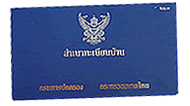
5.2There are 2 types of Tabien Bahn: The blue book (Thor.Ror.14) for Thai nationals and; the yellow book (Thor.Ror.13) for foreigners. A Ta.Bian.Baan (house book), pronounced as Tabien Baan, is the government issued booklet with the official exact address of the house and registers the (Thai) persons who live in the house. It could state the name of the owner but in case of a foreign owner not necessarily. Note that a house in Thailand (separate from the land) does not have an official ownership title deed document. A house book is not an ownership document but merely a house and resident registration book. Proof of ownership of a structure (separate from the land) is usually established by the Thai script construction permit issued by the local Or.Bor.Tor (if any) with the owner's name on it or the the official Thai script land office sale agreement in case of transfer of ownership of an existing house.
See also
6 Real estate ownership by a Thai married to a foreigner
Foreigners married to a Thai national can't own land in Thailand and can't have an ownership interest in land as jointly owned marital or matrimonial property between husband and wife. The Land Department does allow a Thai national married to a foreigner to own land as a personal property after a joint statement with the foreign spouse that the money expended on the land is personal property of the Thai spouse. This means that the land (and in practice often land and house and in some cases condominium) is purchased and registered as a personal property of the Thai spouse and therefore will not become a jointly owned and managed property between husband and wife (Sin Somros). The confirmation in the certify letter is based on the principle of section 1472 Civil and Commercial Code that if personal property has been exchanged for other property (in this case land) that property shall be a personal property. The foreign spouse has no direct ownership rights in such assets based on Thai family laws governing property between husband and wife.The Thai spouse will appear to be the sole owner and manager of the land and as a personal asset it is not automatically (pursuant to divorce laws) part of the division of assets when the marriages ends.
See also
- Buying property with a Thai spouse
- Agreements between husband and wife
- Buying a condo with a Thai spouse
- Land office procedure (Land Dep.)
- Family laws in Thailand (law index)
- Land and house usufruct contract (Download)
7 Nominee owner
Nominee owner refers to a situation where a Thai national purchases or where it appears based on the circumstances a Thai national is purchasing land on behalf of a foreigner or acts as the agent for the foreigner in the land purchase. In practice it occurs that foreigners purchase land and register ownership in a Thai national’s name and in return is given a lease, superficies or usufruct. This could be combined with a loan agreement and sometimes a mortgage registration. This structure is legal as long as the Thai national is not restricted in exercising his or her absolute ownership rights in the land which in essence relates to the right to manage the land - such as the freedom to encumber, sell and transfer the land. If such rights are restricted and lies with the foreigner it could deemed that the Thai national acquired the land under section 96 of the Land Code Act ‘as the owner in place of a foreigner’ or acquired land on behalf of a foreigner as his agent. If it is deemed the Thai national acquired the land under section 96 of the Land Code Act both the foreigner and the Thai national are liable for fines and even imprisonment.
See also
8 Usufruct
Usufruct contract refers to the agreement and the right to use or occupy another's real property for a term up to 30 years but in any case not exceeding the life of the person granted the right of usufruct. A right of usufruct in Thailand gives the right to use and manage a real estate property during a person’s natural life. The right in the real estate property exists so long as the usufructuary (the holder of the usufruct right) is alive. After his or her death the real estate property reverts back to the owner. Often a usufruct is given to a family member such as a foreign spouse with the idea that the foreign spouse is protected in the event of death of the Thai spouse (owner).
A usufructuary is not allowed to sell the property (this right remains with the registered owner of the property) and under sections 1417 to 1428 of the Civil and Commercial Code the usufructuary has the obligation to maintain the property and take normal care of the property. If the usufructuary fails to do so and the property would lose value or becomes in a poor state of repair the owner has the right to terminate the right of usufruct. The usufructuary is liable for loss of value or destruction of the property unless he can proof that damages are not caused by his fault. The creation of a usufruct could in certain circumstances be an effective option to protect a foreign spouse during his marriage in Thailand and upon death of his or her Thai spouse, however in some case a usufruct is not the best option.
See also
- Real rights legal blog
- Usufruct in a Thai marriage
- Simple sample contract
- Download Thai usufruct
- Usufruct contract (TH-EN)
9 Superficies
Right of superficies (sections 1410 to 1416 of the Thailand Civil and Commercial Code) in Thailand is a civil law real estate right. A right of superficies legally separates ownership over the land from anything on the land. The right of superficies must be registered on the land title deed to be complete and enforceable. A superficies can be registered as a separate right or as a supporting right (i.e. in combination with a land lease agreement). The person in the agreement granted the right of superficies obtains ownership over the building he builds upon the land without obtaining or having ownership rights in the lands. Registration of a right of superficies will be allowed before construction or during the construction of a building, but an existing building requires transfer of ownership (and payment of transfer tax) first.
See also
10 Habitation
The right of habitation (sections 1402 to 1409 of the Thailand Civil and Commercial law) refers to the right of a person to live in the house of another gratuitously. The right of habitation differs from a usufruct contract that the person granted a usufruct is allowed to transfer the exercise of his rights to a third person (not the actual usufruct), where the right of habitation grants only the use of a property for the residence of the grantee himself and family. A habitation contract refers to the right of dwelling in a house. The right of habitation is granted gratuitously, otherwise the matter would become 'hire of property'. A right of habitation can be created by last will in Thailand (the owner grants the right of habitation in his last will or testament) or by gift from the owner to a third party. A right of habitation is complete upon registration and endorsement on the title deed at the land office where the property is located.
See also
11 Servitude
Servitude is for a part the Thai legal equivalent of an English easement. It is a non-possessory interest in land. Servitude is governed by the Civil and Commercial code sections 1387 to 1401. Section 1387: 'An immovable property may be subject to a servitude by virtue of which the owner of such property is bound, for the benefit of another immovable property, to suffer certain act affecting his property or to refrain from exercising certain rights inherent in his ownership'. Servitude usually involve two or more separate properties/ plots of land, one of which is burdened and the other benefited by the servitude. The burdened parcel is called the servient property and the benefited parcel the dominant property. Servitude can involve several kinds of benefits and burdens, but usually it involves the use of neighboring well, the use of an access road over adjoining land plots, laying irrigation ditches, laying pipelines or utilities over neighboring plots. A registered right of servitude is an important right in case a plot of land is surrounded by other plots without direct access to a public road. In this case a right of servitude registered over adjoining plots guarantees uninterrupted access to dominant property.
See also
12 Buying real estate in foreign controlled Thai company
Up to the 2006 land office guidelines issued jointly by the Ministry of Interior and the Land Department it was common practice for foreigners to form a Thai company for the purchase of land or condominium beyond the foreign ownership quota in Thailand. As long as the company had majority Thai shareholdings there were no restrictions when purchasing a property and the partly foreign owned company was treated like any other Thai company. Currently the government is restricting this illegal use of Thai companies and nominee shareholding structures by foreigners. Under new regulations for land offices and business registration departments the officials must now follow procedures when confronted with a Thai company with any foreign shareholders involved or a foreign director authorized to sign or co-sign on behalf of the company. The procedures must prevent the illegal use of Thai nominee shareholders and front companies by foreigners.
The practice of holding companies for property purchases by foreigners is currently much less common. When a foreigner under the new land office procedures is advised to buy a property in Thailand on a Thai company name the foreigner will generally not appear on the company formation documents (Memorandum of Association/ shareholder list). Only after the property has been transferred to the 100% Thai company up to 49% of the (preference) shares will be transferred to the foreigner. Note that a Thai company formed as a front for foreign property ownership is illegal and leads to unlawful foreign ownership (because of its purpose and Thai nominee shareholding structure). A company that owns a real estate property must appear to be a normal active company running a business and show business activity, hold yearly shareholding meetings, file yearly balance sheets and correct accounting, and as a partly foreign owned company must comply with foreign business laws. It cannot be a dormant property holding company merely holding land on behalf of the foreigner (that would be illegal).
See also
- Pitfalls of property companies
- New property law starts
- Business registration rules
- Inheritance of the ltd assets
- Real estate article blog
13 Land Titles
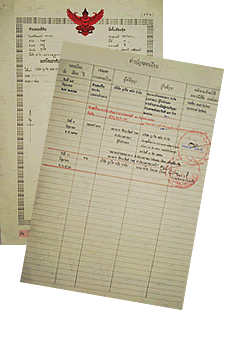 The most important part of any real estate investment is the land title deed. Does the land have a suitable and legally issued title deed. The land title deed is the official a document administrated by the Land Department which states and proves a person's legal right to own or possess a piece of land, its survey status, as well as rights, obligations, or mortgages on the property. The ONLY viable land titles for investment, whether freehold through a company, by a Thai national or through leasehold is in the first place the Chanote (N.S.4.J) freehold land title followed by the Nor Sor Sam Gor (N.S.4.G). Less attractive is the Nor Sor Sam (N.S.3) as this land title is not (yet) accurately surveyed and the area must be confirmed with neighboring land. This land may only be sold subject to a 30-days notice period in which it is not uncommon that boundary or ownership disputes are started. This type of land can be upgraded to a Nor.Sor.3.Gor or Chanote.
Overview of all titles issued by the Thai Land Department Sor Kor Nung (S.K. 1), Nor. Sor. Song (N.S. 2), Nor. Sor. Saam (N.S. 3), Nor. Sor. 3 Gor (N.S. 3 G.), Nor. Sor. 3 Khor (N.S. 3 K.), Nor. Sor. 5 (N.S. 5), Nor. Sor. 4 Jor (N.S. 4 J.) or Chanote title deed. Land titles issued by other government departments Sor. Por. Gor. 4-01 (S.P.G. 4-01), Sor. Tor. Gor. (S.T.G.), Por. Bor. Tor. 5 (P.B.T. 5), Nor. Kor. 3 (N.K. 3), Gor. Sor. Nor. 5 (G.S.N. 5)
See also
14 Real estate Transfer fees
When purchasing a freehold apartment unit in a project licensed under the Condominium Act or real estate in a government licensed housing development consumer protection laws specify that the developer may ONLY pass on the transfer fee at a percentage of 50% to the buyer. As there is no fixed rule in the law on how the land office fees and taxes are split between the seller and buyer in a private sale or sale in a private development this should be agreed as part of the sale and purchase. The following land office taxes and fees apply to condos, land, land and house, and the transfer of a house separate from the land and are charged by the Land Office at the time of transfer: transfer fee (2%), Specific Business Tax (3.3% and if applicable), Stamp Duty (0.5% and does not have to be paid if Specific Business Tax is paid), Income Withholding tax (for companies fixed at 1% and a progressive rate for individuals).
See also
15 Property Tax
There is currently no general annual property tax in Thailand, but for land and properties put to a form of commercial use (rented out, company owned properties, used as storage, investment (or i.e. not used as the main residence of the owner)) an annual land and house tax is charged at a rate of 12.5% over the yearly rental or assessed yearly rental. There are plans to reform the current tax system and introduce a more general property tax. There is also a small local maintenance tax which has as object of tax undeveloped land only.
See also
- Tax bill back in discussion (article)
- Land and house tax (article)
- Local land tax
16 Building and Construction
Construction in Thailand is primarily governed by the Building Control Act and the Town and City Planning Act. The Building Control Act controls and set standards for design and construction which apply to new buildings and most alterations and renovation to existing buildings and punishment in case of violation. The Town and City Planning Act deals with the environment and use of land in different zones. In addition there are under both acts numerous ministerial regulations and specific acts governing building and construction in Thailand.
See also
- Buying and building a house (article)
- Construction contract (TH-EN)
- Change of building permit
- Hire of Work (law translation)
Readers also liked:
- Inheritance of real estate in Thailand
- Foreign Business in Thailand
- Condominium knowledge for foreigners
