
 BUILDING LEGAL OWNERSHIP OF A HOLIDAY HOME IN THAILAND
House construction laws in Thailand
Construction in Thailand is mainly regulated by the Building Control Act and the Town and City Planning Act. The Building Control Act provides for governmental control of virtually all types of construction by means of various applications and punishment in case of violation, the Town and City Planning Act deals with the permissible uses of land in different zones. In addition there are under both Acts Ministerial Regulations specifying regulations and zone restrictions. Building and construction can also be restricted by environmental and other laws (Nature Reserve Act, Forest Act, etc.) or if the land is burdened with a right of servitude. The relation between a customer/ employer and a builder in Thailand is primarily governed by a construction contract and the Civil and Commercial Code (specifically the chapter 'hire of work').
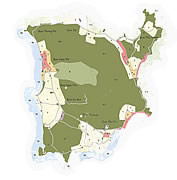
In addition to the zone regulations (12) for Samui specifying the type of use to which land/ property may be put in specific areas issued under the City Planning Act there are general building zone regulations (4) issued under the Building Control Act, giving standard building requirements and restrictions depending on its distance from the beach. These restrictions relate to the maximum size, distance to the land border, design and the height of the building (sample). Similar building regulations exist in Phuket, Pattaya, Koh Phangan, Hua Hin, etc..
Building or buying a home in Thailand
Foreign land ownership restrictions in Thailand relates to land only, not to the building on the land or condominium registered under the Condominium Act. The land and any structure on the land can be owned independently by different persons. Foreigners buying a home in Thailand can lease land (and optional obtain a right of superficies) and own the house as a personal property. In any land leasehold structure it is recommended to obtain ownership over the house, but ownership over the land remains the higher absolute right and the right to own the house on the land is relative to the right to use the land. The right to own the house on another man's land always follows the term of the land lease or superficies agreement and cannot exceed a term of 30 years after which the lease and/or superficies must be renewed.
How to own a house distinct from the land it is on
Buildings (apart from condo apartments) do not have a separate ownership title deed document. The procedure to obtain ownership of a structure separate from the land is as follows:
- If buying from a developer (depending on the sale and tax structure and liabilities the developer chooses) the sale of a house separate from the land lease is either by:
- a building sale and purchase agreement (see procedure under 3), or
- a building construction contract with a building permit in the foreign purchaser's name.
- In case an individual person is developing a plot of (leased) land the building permit should be issued, or during the construction changed by the Or Bor Tor, in the name of the person that leases the land.
- Sale of a completed or existing building separate from the land requires the current owner and purchaser of the house to:
- sign a standard land office Thai script sale of a structure document (signed at the land office in front of the competent land official)
- followed by a 30 day public announcement/ posting of the house sale at specific locations
- after the announcement period the parties return to the land office to complete the transfer.
Sale of completed existing house
The sale of an existing house separate from the land (land lease combined with house sale/ ownership) must be registered with the local land office (the Samui, Phuket, Hua-Hin, Bangkok or any other local Land Department's branch office) to be complete and property ownership transfer fees and taxes must be paid. Local property developers (in Samui) tend to offer a sale and purchase agreement for the house but skip the official transfer procedure (ownership has not transferred), or lease land and house (not recommended). The transfer of ownership of a building will take at least 30 days from the first visit to the land office to the issuance of the sale of a structure document (sample right or view sale document with short translation). The official land office sale document, stamped and signed by the local land office, is the document that proofs the purchaser's rights to the house and completes the transfer. Required documents:
- ID-card, passport (seller/ buyer)
- House registration book (Tabien Baan)
- Land title document
- House building permit
- Property transfer fees
Building permit
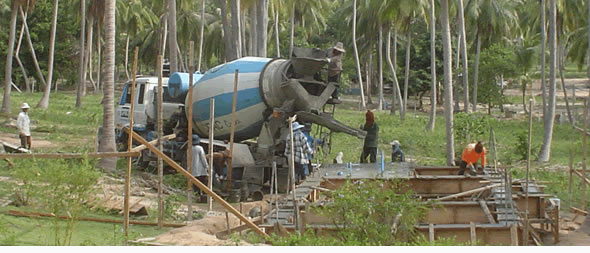
The seller of a house must have a building permit (sample top right) issued by the local Or Bor Tor. The building permit is the evidence that shows he owns the building and obtained approval to build the house. The building permit must be submitted to the Land Registry for the transfer of the house. It should be checked if the house is actually built according to the building permit. If the seller can't show a building permit the house could be illegally built or may not be built according to local building regulations. The building Control Act imposes heavy fines and even imprisonment on violators. If any violation is found the authority has the power to issue a stop-work order and demand rectification of the building or an incorrect part within a reasonable time. If the building or an incorrect part cannot be rectified, the authority has the power to order a demolition thereof.
When a land leaseholder hires a builder the building permit could be issued in the builder's name or land owner's name. In this case the name on the building permit should be changed by the local Or Bor Tor to the lessee's name at any time during the construction, but prior to the issuance of the house registration book (tabien baan). The building permit is proof that you own the building and the building does not belong to the land owner but to the land leaseholder. Separate ownership of the house increases the lessee's right and also lowers property tax liabilities (housing and land tax).
Research by the Agency for Real Estate Affairs indicates the new city plan for Koh Samui will mandate that property projects cannot be constructed higher than 150 meters above sea level read more.... Similar to Phuket where the Ministry of Natural Resource and Environment issued a notification to protect the environment in Phuket prohibiting any building and renovation in the area 80 meters and more above the average sea level. Construction is not allowed even though the land could have a full land title deed.
General considerations when planning to build or buy a house in Thailand
(also for leasehold land for foreigners)
- what is the land title (this should at least be a Nor.Sor.3.Gor/ Khor or better a Chanote land title deed);
- is the land tile deed correctly issued and the title cannot be revoked on the grounds of any illegal issuance process (read warning under 'articles news');
- is there a solid legal structure for a long term interest in the land (proper land lease and/or superficies registered with the Land Department);
- what are the zoning and building regulations and restrictions for the specific area (what use and construction is allowed in the area);
- is there a private servitude, public or municipality road connecting the land with the public road;
- are there any mortgages, encumbrances, claims or security of any kind registered against the land title deed;
- are there any conditions in the previous sale or gift (right of redemption);
- the land is not subject to any promise or agreement, court order or other judgment or decree;
- the land owner is not involved in any action brought before court or bankruptcy/ insolvency proceedings;
- the land is not encroached nor is there encroachment on the land;
- the land is not subject to any land expropriation plan by the government;
- the land is not located in a land reform zone according to the laws on land reformation for agricultural purposes;
- the land is not located in a forest or nature reserve zone, or other area reserved for the public;
- the seller has not (implicitly or explicitly) declared the intention or done any act to give the land whether in whole or in part to the public;
- the seller does not hold the land as an agent on behalf of any third party, nor is there any third party having priority right to the land.
Samui building zones under the Building Control Act:
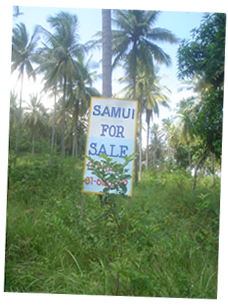
- Area 1: No building is allowed up to 10 meters from the beach. The coastline or beach line is a moving line and often at the discretion of the Or Bor Tor who can choose more or less where it starts.
- Area 2: Building of a single story house not exceeding a height of 6 meters with a total building area of up to 75 sq.m. is allowed up to 50 meters from the beach or coastline.
- Area 3: Building of a building with a height of 12 meters and a ground floor or total building area of not more than 2000 sq.m.
- Area 4: Any building of up to 12 meters can be built within an area of more than 200 meters from the beach.
The above zoning areas are issued under the Building Control Act specifying what you can build. Different zones under the City Planning Act can be found in the city planning act map controlling land and property use in specific areas. The main aim under the Town and City Planning Act for Samui is to set rules for sustainable development of Samui and protect Samui's environment, however it has always been relatively simple and common practice for developers to circumvent the land allocation rules, housing development license requirements and environmental control regulations. Investigations in Samui showed that a majority of the developers in Samui violated the Land Department's land allocation rules.
Section 4 (Land Allocation Act): 'Land Allocation refers to the sale of plot of land that has been divided into 10 plots upwards with property or other remuneration in return regardless whether it is divided from one or many adjacent plots. It also refers to the execution that the land has been divided less than 10 plots and thereafter, within 3 years, it has been divided in total into 10 plots onwards'.
Section 21 (Land Allocation Act): 'Land allocation shall be prohibited unless the approval by the committee. The procedure for application and issuance of license shall be in accordance with regulation, method and conditions specified in Ministerial Regulation'.
Articles news
- An initial probe into a land scandal in Phuket found ownership documents and title deeds for four plots in Kathu district had been unlawfully issued by corrupt officials read more...
- Forest land is classified as government property under the Ministry of Natural Resources and Environment and cannot be owned by any private entity. Due to uncontrolled development and corruption in the past Samui has many illegally issued land ownership titles in these areas that may be corrected or revoked and returned to the state. More complaints of land encroachment in different areas read more..
- Investigations showed that the majority of the developers in Samui advertising property in magazines and on websites were not licensed to do business and had violated the Land Department's land allocation regulations. As a result land titles are dodgy and the status of the land NOT protected by land allocation laws or general development regulations. Foreigners have been warned they risk losing all and may face legal problems later read more...
- Following a series of inspection trips around the Samui Khun Tingchai Rochanaknan form the Department of Natural Resources and Environment recently said that because of continued uncontrolled development, Samui in once again in great danger of flash floods and landslides this year read more...
- Samui property sales in problem, sales in Pattaya, Phuket also slow. Sales Pattaya, Phuket and Koh Samui drop. Samui market in dire straits read more...
See also
- Overview Thailand property laws
- Samui zoning map (sample)
- Land title deeds (land use, possession, ownership documents and deeds)
- Thailand Land Code Act (Land Laws)
- Hire of work (Civil Code)
- Land sale and purchase agreement (contract template)
- Building contract (contract template)
- Land lease agreement (contract template)
