
Licensed condominiums vs unlicensed apartment buildings
Not all apartment buildings in Thailand are registered and licensed as 'condominium'
In tourist resort areas, such as Pattaya, Phuket, Hua Hin and Koh Samui, holiday 'leasehold' apartments are often confused with condominiums licensed and registered under the Thailand Condominium Act. On the outside these buildings could look the same but legally they cannot be compared. Buying a condo in a building registered under the Condominium Act is far from the same as buying a leasehold unit in a residential apartment building having no license or condominium registration with the Land Department.
With leasehold apartment in this blog post we refer to an apartment complex not registered under the Condominium Act. For lease of a condominium unit registered under the Condominium Act we refer to the article 'lease purchase of a condominium'
Holiday apartments are not condominiums governed by the Condominium Act.
Apartment buildings not registered and licensed as a condominium with the Land Department have several drawbacks which among others relate to the lack of individual ownership rights and the lack of tenant and consumer protection laws for the unit lease purchasers. Another main aspect is that the building and common areas remain owned and controlled by the owner of the building (developer) and not the unit 'owners' as would be the case if it was a true condominium registered under the Condominium Act.
What are the main drawbacks and differences:
| CONDO REGISTERED under the Condominium Act | NOT REGISTERED as a condominium | ||
| 1. legally recognized government issued and administrated individual ownership title deeds |  |
1. individual possession of the units as part of the building under a lease contract |  |
| 2. as freehold owners free to encumber, sell and dispose of the condominium unit | |
2. selling is assigning the lease (as a tenancy contract) and requires consent of the lessor (owner of the building/ landlord) |
|
| 3. co-ownership of the common areas of the condominium, including the land on which the building sits | |
3. no ownership nor co-ownership, if any, an interest in the common areas of the project must be created separately | |
| 4. management and control of the building is governed by the Condominium Act and lies with the unit owners | |
4. management and control over the building lies with the owner of the building (landlord/ developer) | |
| 5. legally set democratic voting right system for the owners of the units on how the condo is managed | |
5. the occupants of the building are in essence tenants and have to comply with rules set by the owner of the building |
|
| 6. condominium development is a ‘contract controlled’ business and must offer minimum consumer protection | |
6. the contract structure under which the leasehold apartment is sold could go either way, pro lessee or pro lessor | |
| 7. owner occupied properties are not subject to housing and land tax | |
7. leased properties are subject to (a rental) housing and land tax | |
| 8. exclusive and absolute ownership of the unit for an indefinite period not limited by time and transferable by succession |
|
8. possession under a lease is for a fixed and limited term with a maximum of 30 years, and is terminated upon death |
|
Are leasehold residential apartments legal
Legally there is nothing against leasehold apartments and generally these apartments are less expensive, but as a buyer of a leasehold apartment you should double or triple check the agreements involved and intention of the developer. These structures do not offer the same (consumer) legal protection as is offered in a licensed condominium development project. One offers government control, actual ownership and protection under the Thailand Condominium Act, the other offers possession through a lease agreement under the Civil and Commercial Code (what is lease in Thailand) and must offer individual protection through private agreements. The rule with apartments in tourist areas such as Pattaya, Hua Hin, Samui and Phuket is know what you are buying and let the buyer beware.
Note in particular the responsibilities and obligations under the lease agreement which often put a financial burden on the lessee for maintenance and management costs, which again are often set by the developer. Not paying such fees (e.g. because these are exorbitant) could constitute a breach of the lease contract and could lead to a premature termination of the tenancy.
 Is it a leasehold apartment or a true condominium?
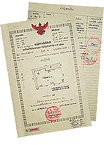
If you are buying a condo off-the-plan the sale agreement will clearly mention that it is an apartment project under the Condominium Act B.E. 2522 and that transfer of ownership will take place at the land department and if it concerns a leasehold or freehold purchase. In case of a true titled condominium each condo unit will have a government issued ownership title deed as shown on the right containing all specific details of the unit (floor-plan, size, owner, etc.). Leasehold apartment sale structures will usually involve a lease agreement and/ or maybe a share transfer, rules and regulations and a management and maintenance contract.
Unlicensed holiday apartments could have separate house books for each unit stating the address and occupants, but do not confuse a house book (Tabien Baan) with the ownership title document (ownership title deed).
Read more...
|
 |
|
